Sometimes the Bravest Move Is Walking Away From the Stage
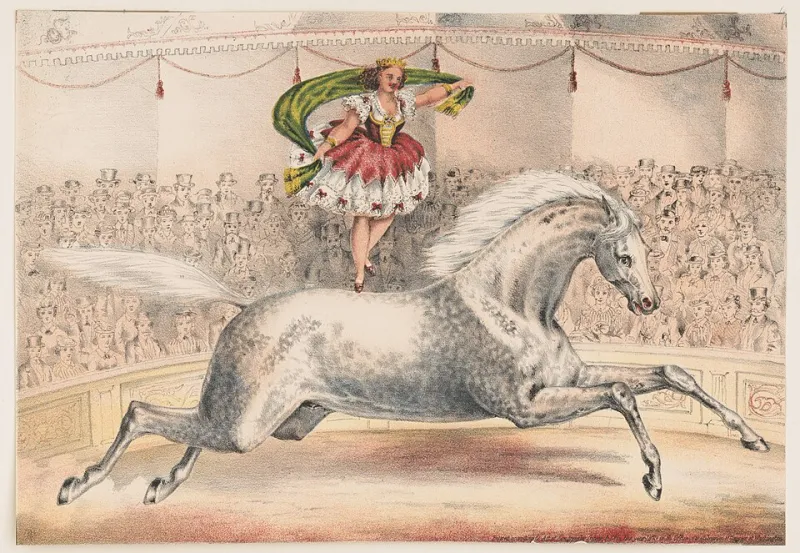
Photo: Popular Graphic Arts, Public domain, via Wikimedia Commons
There's a story we tell ourselves in this industry. It goes something like this: if you're not performing, you've given up. If you're not auditioning, you're fading. If you're not center stage, you're somehow less than what you set out to be.
That story is wrong. And I think a lot of us know it — we just don't say it out loud.
Because here's what nobody really talks about: some of the most creatively fulfilled people I know are former performers who made a deliberate choice to step sideways, or backward, or completely off the path they started on. And they didn't lose anything in the process. Most of them feel like they finally arrived.
The Pivot Isn't Failure — It's Data
When someone leaves a performing career, the outside world tends to read it one of two ways: burnout or failure. But spend five minutes actually talking to people who've made that shift and you'll hear something completely different.
You'll hear things like I finally feel like myself or I didn't realize how much I was performing offstage too or — my personal favorite — I'm using everything I learned, just differently now.
That last one is the thing worth paying attention to.
Performers spend years — sometimes decades — developing a very specific set of skills. Emotional intelligence. Physical awareness. The ability to read a room in real time. Discipline that most nine-to-fivers genuinely can't fathom. The capacity to take direction, absorb feedback, and turn it into something better by the next rehearsal. The ability to hold an audience's attention, to communicate without words, to make something feel true even when it isn't.
Those skills don't evaporate when you stop auditioning. They travel with you. And in a lot of industries, they're genuinely rare.
Where Performers Actually Land
Look around and you'll find former performers in some pretty unexpected places. Broadway veterans turned corporate trainers who command rooms full of executives the way they once commanded full houses. Former dancers who moved into physical therapy, bringing a body literacy that most practitioners spend years trying to develop. Actors who became therapists, writers, directors, producers, brand strategists, UX designers, teachers.
In the US, the entertainment industry pipeline feeds into so many adjacent worlds — content creation, marketing, education, nonprofit leadership, tech. Silicon Valley has quietly discovered that people with performance training make extraordinary product managers and public speakers. Ad agencies in New York and LA have been hiring former improvisers for years because the skills that make someone good at improv — listening, adapting, building on what's already there — make someone exceptional in a creative collaboration environment.
None of that is accidental. It's the natural result of what performance training actually does to a person.
The Identity Piece Is the Hard Part
Here's where it gets genuinely complicated, though. Because leaving performance isn't just a career decision — it's an identity decision. For most of us, being a performer isn't just what we do. It's who we are. It's how we introduced ourselves at parties when we were twenty-two. It's the first thing in our bio. It's the frame through which we've understood ourselves for as long as we can remember.
So when someone walks away from that — even by choice, even toward something better — there's a grief involved that people outside the industry rarely understand. You're not just changing jobs. You're renegotiating who you are.
And that process takes time. It's allowed to be messy. It's allowed to feel like loss even when it's also clearly the right call.
What I've noticed, though, is that the people who navigate that transition most gracefully are the ones who stay honest about it. They don't pretend they didn't care. They don't perform indifference about a life they genuinely loved. They let themselves grieve the version of themselves that was always going to be a performer — and then they get curious about who they're becoming instead.
Redefining What a 'Real' Career Looks Like
The assumption that a legitimate entertainment career requires you to be in front of the camera or on the stage is one of the more limiting ideas our industry perpetuates. It keeps people stuck in situations that aren't working because they're afraid that pivoting means admitting they couldn't hack it.
But consider this: the directors, the casting directors, the producers, the acting coaches, the choreographers, the dramaturgs, the writers — these are people who shape the work. They're not incidental to the industry. In many cases, they're the reason the industry functions at all.
And most of them got there because they spent time performing first. That time wasn't wasted. It was the foundation.
If you've spent years training your instrument, learning to take up space, understanding how stories work from the inside out — you have something genuinely valuable to offer in a hundred different directions. The stage was the training ground. It doesn't have to be the destination.
What the Pivot Actually Requires
None of this is to say the transition is easy or automatic. Walking away from performance — even toward something you're excited about — requires a few things that don't come naturally to most of us.
It requires honesty about what's working and what isn't. It requires the willingness to be a beginner again in a new field, which is humbling when you've spent years becoming genuinely skilled at something else. It requires letting go of the metrics you've been measuring yourself against — the auditions, the callbacks, the credits — and figuring out what success even looks like in a new context.
It also requires resisting the urge to frame the pivot as a consolation prize. Because it isn't one. Choosing a different path because it fits you better isn't giving up. It's paying attention.
The Door You Didn't Expect
I think about the performers I've known who made the leap — into teaching, into producing, into completely unrelated fields — and what strikes me most is how lit up they are when they talk about their work now. Not because they stopped loving performance, but because they found a way to use everything performance gave them in a context that actually fits where they are right now.
That's not a consolation story. That's a success story.
So if you're standing at a crossroads right now, wondering whether stepping back from the stage means stepping away from yourself — I'd push back on that. The skills are yours. The discipline is yours. The self-awareness is yours. Those things don't belong to the stage. They belong to you.
Sometimes the bravest thing a performer can do is trust that what they built in that world is portable enough to carry them somewhere new.