Show Them the Mess: The Case for Letting People See How the Work Actually Gets Made

Photo: Taduuda taduuda, CC0, via Wikimedia Commons
The Gap Between What We Post and What We Actually Do
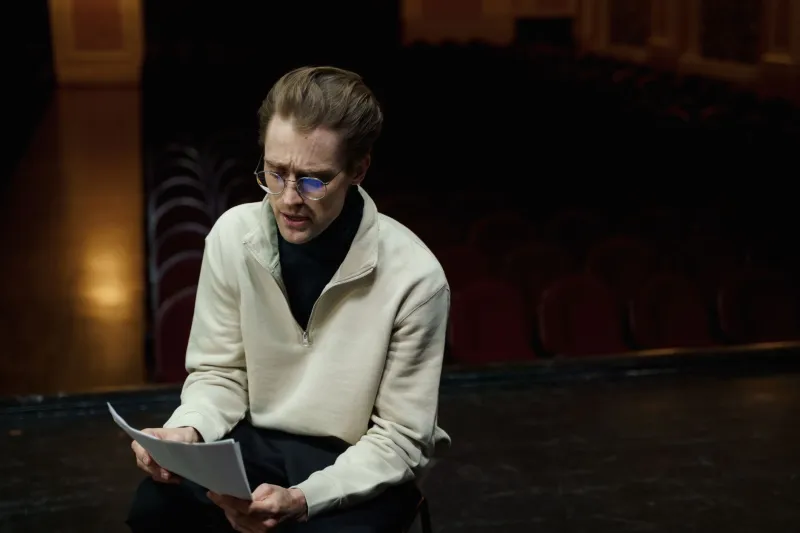
Let's be honest about what a typical workday looks like for a working creative. There are probably a few hours of actual creative output, if you're lucky. There's also a lot of staring at a screen, rewriting the same paragraph four times, sending emails that don't get answered, sitting through a rehearsal where nothing clicks, eating lunch over a script you're not sure is working, and wondering — again — whether this is what you're supposed to be doing with your life.
None of that makes it to the Instagram grid.
What does make it: the finished product, the opening night photo, the announcement, the press shot, the moment everything looked like it came together seamlessly. And the gap between what we post and what we actually do has created a weirdly distorted picture of what creative careers look like in practice.
The result? A whole generation of emerging performers and creators who feel like they're doing something wrong because their process is messy and slow and unglamorous. They're not doing something wrong. That IS the process. We've just collectively agreed not to show it.
What the Work Actually Looks Like
I've talked to a lot of people across this industry — actors, writers, musicians, comedians, directors — and when you get them off the record, the picture they paint is remarkably consistent.
The musician practicing the same eight bars for three hours until it finally feels right. The screenwriter who has a 'writing day' that produces one usable sentence and a lot of deleted drafts. The actor who runs lines alone in their apartment so many times the words stop sounding like words. The comedian who performs a new bit seventeen times in small rooms before they trust it enough to put it on video.
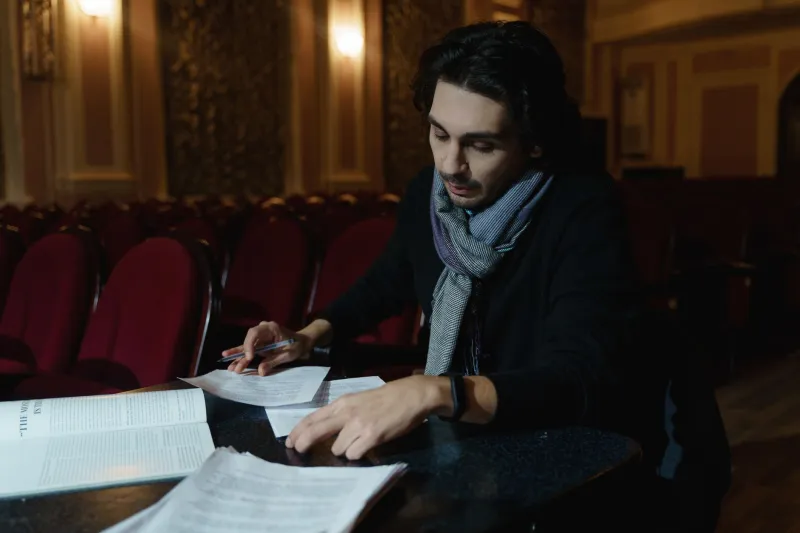
And then there's the administrative layer that nobody talks about: answering your own emails, chasing invoices, updating your website, pitching yourself to people who won't respond, scheduling your own social content, doing your own PR. For most working creatives — especially early in a career — the business of being a creative takes up as much time as the creative work itself.
This is not failure. This is the job. But because we don't see it represented anywhere, it feels like a dirty secret.
Why the Highlight Reel Is Actually Discouraging People
There's research behind this, but you probably already feel it intuitively. When we only see people's best moments — the polished performance, the glowing review, the sold-out show — we unconsciously calibrate that as the baseline. Then we look at our own messy, uncertain, work-in-progress reality and feel behind.
This is especially brutal for emerging performers who are still in the thick of building their skills. They see a finished version of someone's career and compare it to their own beginning. That comparison doesn't just feel bad — it actively discourages people from continuing.
Some of the most talented people in this industry have quit not because they lacked ability, but because the gap between where they were and where they thought they should be felt insurmountable. And a lot of that gap was manufactured by a culture of curated perfection.
The Counterintuitive Power of Showing the Process
Here's what's interesting: when creators do pull back the curtain, the response is almost always stronger than they expected.
BTS footage outperforms finished content on most platforms. Behind-the-scenes reels, 'how I made this' breakdowns, honest posts about a project that didn't work — these consistently generate more genuine connection than highlight content. Because people don't just want to admire you. They want to relate to you. They want to see themselves in your story, and that requires seeing the parts that aren't perfect.
There's also a trust component. An audience that has watched you struggle and iterate and figure things out has a fundamentally different relationship with you than one that only sees your wins. They're invested in the journey, not just the destination. And that kind of connection is what actually builds a lasting career.
What This Looks Like in Practice
Showing the mess doesn't mean performing struggle or manufacturing drama for content. It means being matter-of-fact about the reality of creative work.
A few ways this can look:
Document the repetitive stuff. A quick clip of your third hour of rehearsal, captioned honestly, does more to normalize the grind than any inspirational quote about the process.
Talk about the experiments that didn't work. Not with excessive self-deprecation, just factually. 'I tried this approach and it didn't land. Here's what I learned.' That kind of transparency is genuinely useful to people coming up behind you.
Be specific about the administrative reality. The hours spent on logistics, on outreach, on the unsexy business side of a creative career — naming this explicitly helps other people feel less alone in it.
Share the in-between moments. Not everything needs to be a finished thought or a polished product. The draft, the sketch, the rough cut — these are real creative artifacts and they deserve to exist in public.
It's Also Just More Honest
Beyond the strategic value, there's something worth saying about this from a purely human standpoint. The creative life is genuinely hard. It's also genuinely rewarding. But when we only broadcast the reward and hide the difficulty, we're presenting a version of ourselves that isn't quite real — and that costs us something, both in terms of connection and in terms of our own integrity.
The people who have had the longest, most sustainable careers in this industry tend to be the ones who never seemed to be pretending it was easier than it was. They talked honestly about the grind. They let people see the work. And somehow, that made everything they achieved feel more meaningful, not less.
Your process is not something to be embarrassed about. It's evidence that you're doing the work. Show it.