Why the Most Unforgettable Performers Always Lead with the Truth
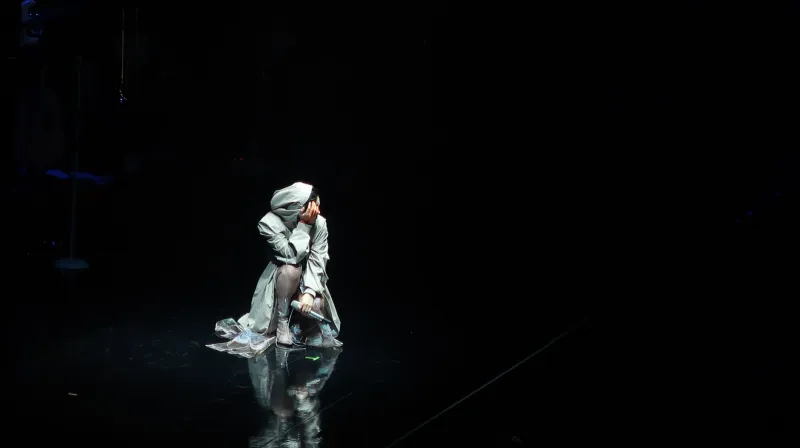
Let me ask you something. Think about the last time a performance — whether it was a concert, a play, a YouTube video, a podcast, literally anything — actually stopped you in your tracks. Made you feel something you weren't expecting to feel. Maybe it even made you text a friend immediately afterward like, you have to see this.
Now think about why. I'd be willing to bet it wasn't because the performer was technically perfect. It was because they were real.
That's the thing about authentic storytelling that nobody really talks about honestly: it's terrifying. And it's also the only thing that actually works.
The Vulnerability Trap (And Why It's Not What You Think)
When people hear the word "vulnerability" in a performance context, they usually picture someone crying on stage or oversharing in an interview. And look, sometimes that is part of it. But authentic storytelling isn't about trauma dumping or performing emotion for the sake of seeming relatable.
It's about specificity.
Here's what I mean. When a performer says something like "I've been through hard times," that's vague. It bounces right off the audience. But when they describe the exact feeling of sitting in a car in a Target parking lot at 2pm on a Tuesday, not being able to go inside because everything suddenly felt too heavy — that lands. That's a Tuesday afternoon most Americans have quietly lived through in one form or another, and the specificity of it makes it universal.
The paradox of authentic storytelling is that the more specific and personal you get, the more broadly it connects. Vague relatability is actually the enemy of genuine connection.
Intentionality Is the Difference Between Sharing and Storytelling
There's a difference between having experiences and knowing how to translate them into something an audience can receive. This is where intentionality comes in, and it's honestly the skill that separates performers who build real fanbases from those who plateau.
Intentionality means asking yourself: Why am I sharing this? What do I want the person on the other side of this to walk away feeling?
It doesn't mean being manipulative. It means being a thoughtful guide. Every great storyteller — from Issa Rae building the world of Insecure out of her own awkward experiences, to Taylor Swift turning her personal diary into a cultural phenomenon — is making deliberate choices about what to show, what to leave in shadow, and how to sequence a narrative so it builds.
When you perform without intentionality, you're just broadcasting. When you perform with it, you're actually communicating.
Finding Your Voice (Without Performing Someone Else's)
One of the most common creative traps, especially early in a career, is unconsciously mimicking the performers you admire. It makes total sense — you're drawn to what inspires you. But audiences are remarkably good at detecting a copy, even if they can't articulate why something feels slightly off.
Your unique voice isn't something you manufacture. It's something you excavate.
Practical ways to start:
- Journal without editing yourself. Not for content. Not for an audience. Just to hear how you actually think and talk when nobody's watching. The patterns that show up there? That's your voice.
- Notice what makes you genuinely angry, delighted, or obsessed. Your authentic creative territory lives at the intersection of those things.
- Study your own reactions. When you watch or listen to something and think I would have done that completely differently — that gap is your perspective trying to show itself.
The goal isn't to be unlike everyone else for the sake of it. The goal is to be so fully yourself that comparison becomes irrelevant.
Personal Narrative as Creative Currency
Your life experiences aren't just background noise. They're source material. Every performer who's built a lasting career has figured out how to mine their own story — not exploit it, but use it with craft and care.
This looks different depending on your medium. A musician might pull from a specific relationship to write a bridge that makes strangers cry. An actor might access a real emotional memory to bring a scripted moment to life. A content creator might turn a genuinely chaotic personal situation into a series that builds community around shared experience.
The key is that you're always the author of your narrative, not just the subject of it. That authorship — that sense of control and intentionality — is what keeps storytelling from feeling exploitative of yourself or your audience.
The Long Game of Genuine Connection
Here's something the entertainment industry doesn't always make obvious: audiences are loyal to people, not performances. A technically flawless show can be forgotten. A moment of genuine human truth can build a fan for life.
Building that kind of connection is a long game. It's not about going viral once. It's about showing up consistently, being honest in your craft, and trusting that your specific way of seeing the world is worth sharing.
Because it is. The world doesn't need another version of someone who already exists. It needs you — specific, imperfect, and real.
That's always been the art of it.