Why Being Real Onstage Is Actually the Hardest Thing You'll Ever Learn
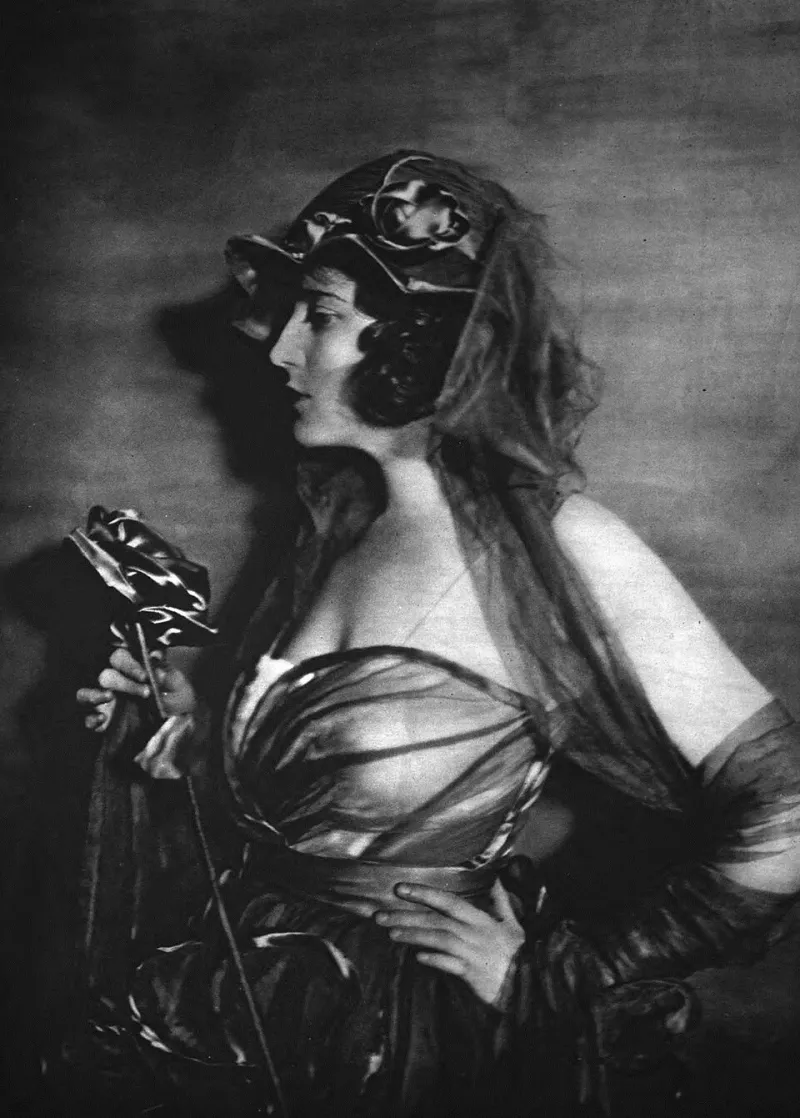
Photo: Alfred Cheney Johnston, Public domain, via Wikimedia Commons
The Myth of Effortless Realness
There's this idea floating around — especially in the age of raw, unfiltered content — that authenticity is what you do when you stop trying. Like if you just drop the polish and let things get a little messy, the audience will feel it. And sure, sometimes that works. But more often than not, what looks effortless from the outside is the result of an enormous amount of deliberate, unglamorous preparation.
The performers who seem the most natural? They've usually worked the hardest to get there.
This is what I'd call the performance paradox: the more genuine something feels, the more craft it likely required. And once you understand that, the whole game changes.
Perfection Is Actually Easier to Fake
Here's the counterintuitive part. A polished, technically perfect performance gives you somewhere to hide. Hit your marks, nail your notes, deliver the lines with precision — and if the audience doesn't fully connect with you, well, at least everything looked right. Perfection is a kind of armor. It keeps people at a distance while still earning their applause.
Authenticity strips that armor away. And walking onstage without it — or on camera, or behind a microphone, or even in a room full of industry people — requires you to have done a very different kind of work. Not just technical, but internal. You have to know yourself well enough to translate something true about your experience into something an audience can feel, without it dissolving into self-indulgence or collapsing under pressure.
That's a high-wire act. And it doesn't happen by accident.
What the Best Comedians Already Know
Stand-up comedy is maybe the clearest example of this principle in action. On the surface, a great set looks like someone just talking — like they wandered up to the mic and started telling stories from their life. But watch how long it takes most comedians to develop even ten minutes of truly personal material that lands consistently. Years. Sometimes a decade.
The vulnerability in a great set isn't accidental. It's engineered. The comedian has figured out which truth to tell, how to frame it so the audience feels invited in rather than alienated, where to place the release valve of a punchline, and how to modulate their own emotional exposure so they don't lose control of the room. Dave Chappelle, Hannah Gadsby, Nate Bargatze — wildly different styles, but all of them doing this same invisible work of making calculated emotional honesty look casual.
That's not 'just being real.' That's craft.
Actors Who've Talked About This Openly
In acting, the conversation around authenticity versus technique has been going on for over a century. Stanislavski built an entire system around it. Meisner refined it. And the debate between method acting and more technical approaches has always been, at its core, a debate about how you access genuine emotion in a controlled, repeatable way.
What the best actors understand — and what Meryl Streep has said in various interviews over the years — is that real emotion on screen or stage isn't the same as just feeling things. It's being able to feel things on cue, under hot lights, in front of a crew, while hitting your mark and remembering your lines. That requires an enormous technical scaffold holding up what looks like pure spontaneity.
The actors who skip that scaffold and just try to 'feel it' are often the ones who deliver brilliant moments in rehearsal and fall apart during a live taping.
Musicians and the Architecture of Vulnerability
Singers and songwriters navigate this differently, but the same principle applies. Think about the artists whose music feels like it's speaking directly to you — like they wrote the song about your specific situation. Taylor Swift has built an entire career on this. So has Bruce Springsteen, in a completely different lane. The songs feel personal because they are personal. But they're also carefully constructed.
The chord progression, the lyrical detail, the way the melody rises at exactly the right emotional moment — none of that is accidental. It's the architecture that makes the vulnerability land instead of just sitting there awkwardly. Without the craft, the truth doesn't travel.
So How Do You Actually Build This Skill?
The honest answer is: slowly, and with a lot of failure in the middle.
A few things that tend to move the needle:
Know what you're actually trying to communicate. Vague emotional intention produces vague results. The more specifically you can identify what truth you're trying to share, the more precisely you can build the technical choices around it.
Practice vulnerability in low-stakes environments. Open mics, small workshops, table reads with people you trust. The skill of being open onstage is partly about desensitizing yourself to the exposure enough that you can stay present instead of shutting down.
Study the performers who do this well. Not to copy them, but to reverse-engineer the craft underneath the feeling. What specific choices are they making? What are they not doing? The analysis teaches you more than you'd expect.
Get feedback from people who will tell you the truth. Authenticity that doesn't land is still just a performance that isn't working. You need outside eyes to tell you when something feels real versus when it just feels real to you.
The Work Behind the Realness
At the end of the day, the performance paradox is really just this: the audience doesn't see the years of work that made something feel effortless and true. They just feel it. And that's exactly how it should be.
But for you, the performer, the creator, the storyteller — knowing that the work exists, and that it's learnable, is everything. Because it means authenticity isn't some mysterious quality you either have or you don't. It's something you build. Deliberately. Over time.
And that's actually pretty good news.