You Can Market Yourself Without Losing Yourself

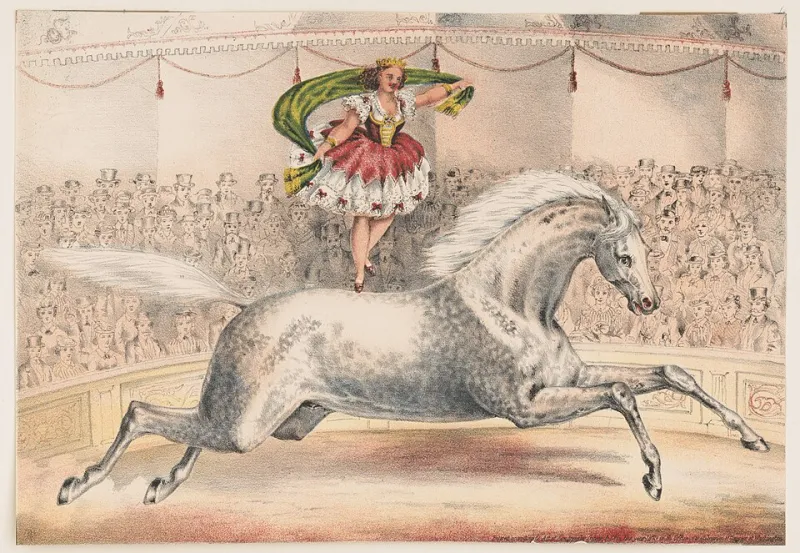
Photo: Carlquist, Sherwin John, 1930-2021, CC BY 4.0, via Wikimedia Commons
Somewhere along the way, "personal brand" became a phrase that makes a lot of performers cringe. And honestly? I get it. There's something that feels gross about treating yourself like a product — like you're supposed to package your personality into a neat little pitch deck and hand it over to the industry with a smile.
But here's the thing: the discomfort isn't with having a brand. It's with the fake version of it. The kind where you're essentially cosplaying a more palatable version of yourself for the sake of bookings.
There's a version of personal branding that's authentic. And there's a version that quietly hollows you out. Knowing the difference matters more than most people talk about.
What a Personal Brand Actually Is (and Isn't)
A personal brand isn't a mask. It's not a character you invented to be more marketable. At its best, a personal brand is just clarity — a clear, consistent signal to the industry about who you are, what you do, and what you bring to the table that nobody else does quite the same way.
Think of it less like a costume and more like a spotlight. It doesn't change what's standing in the light. It just makes it easier for people to see you.
The performers who burn out on their own brand are usually the ones who built it around what they thought the industry wanted, rather than what was genuinely true about them. They chased a version of themselves that was slightly more polished, slightly more palatable, slightly less weird — and then spent years trying to maintain a persona that never quite fit.
That's exhausting. And it shows.
The Line Between Strategic and Performative
Strategic self-presentation means making intentional choices about what you share, how you frame your work, and where you show up. It means understanding your audience and communicating in a way that lands. None of that requires you to be fake.
Performative inauthenticity is something different. It's when the gap between your public persona and your actual self gets wide enough that you start to feel like a stranger to yourself. When you're posting content that doesn't reflect anything you actually care about. When you're saying yes to opportunities that contradict your values because they look good on paper.
The tell? Performative branding feels like maintenance. Authentic branding feels like momentum.
If every piece of content you create feels like a chore — like you're feeding a machine that doesn't really represent you — that's worth paying attention to. You're probably performing a brand rather than living one.
Practical Ways to Keep Yourself in Your Brand
So how do you actually do this? How do you build something visible and professional without drifting away from who you are?
Start with your non-negotiables. Before you think about aesthetics or strategy, get clear on what you actually value. What kinds of projects light you up? What kinds of collaborations make you feel alive? What would you walk away from even if it paid well? Your brand should be built around those answers, not in spite of them.
Let your real voice do the talking. Your actual sense of humor, your genuine perspective, the way you actually talk — these are assets, not liabilities. The performers who build lasting recognition are usually the ones who sound like themselves, even in professional contexts. Especially in professional contexts.
Be selective about what you amplify. You don't have to share everything. Boundaries are healthy. But what you do choose to share should be real. One honest post will outperform ten polished ones that don't mean anything.
Check in with yourself regularly. Ask: does this still feel like me? Does the work I'm taking, the content I'm creating, the image I'm projecting — does it still reflect who I actually am? If the answer starts to drift, that's your cue to recalibrate, not to push through.
The Values Test
Here's a simple gut check I come back to whenever I'm making decisions about how I show up publicly: Would the version of me from five years ago recognize what I'm doing? Would they be proud of it?
Not every decision has to pass that test with flying colors. Growth means changing. But if the answer is consistently "no" — if the person you're performing publicly has nothing to do with the person you are privately — that's a problem worth taking seriously.
Your values are not obstacles to your career. They're the foundation of it. The most durable careers in entertainment are built by people who figured out how to be themselves loudly and consistently, not people who figured out how to be whatever the room needed them to be.
Recognition Without Resentment
Here's what I want for you: I want you to be seen. I want people to know your name, to seek out your work, to think of you when the right opportunity comes up. That stuff matters, and wanting it doesn't make you shallow.
But I also want you to still recognize yourself in ten years. I want the recognition to feel good — not hollow. I want you to build something that you're actually proud of, not just something that performs well.
Those two things are not in conflict. A brand built on who you genuinely are will outlast any carefully constructed persona. Because authenticity doesn't require upkeep. It just requires honesty.
You can market yourself and still be yourself. In fact, that's the only version worth building.