Stop Shrinking: The Unwritten Rules That Are Keeping Performers Stuck in the Wings
Here's a scenario that might feel uncomfortably familiar.
You're in a room — an audition, a pitch meeting, a creative conversation — and you know, somewhere in your gut, that you belong there. Maybe even that you're the most prepared person in that room. And yet, something pulls at you. A quiet voice that says don't take up too much space, or wait until someone invites you to speak, or who do you think you are?
That voice isn't your instinct. That voice is conditioning. And for a lot of performers, it's been running the show for years.
Where the Shrinking Starts
We don't arrive in this industry already apologizing for ourselves. Watch any kid perform — any kindergartner doing a school play or a teenager freestyling in their bedroom — and you'll see someone who hasn't yet learned to be embarrassed by their own desire to be seen. That desire is natural. It's human. It's literally why storytelling exists.
Somewhere along the way, though, most of us absorb a different message. Girls especially get it early: be likable, be humble, don't brag, make room for others. Boys get their own version: don't be soft, don't be too much, don't need too much. And then we all walk into creative spaces carrying those messages like luggage we forgot we packed.
The entertainment industry doesn't exactly help. Audition culture, for instance, is structurally designed to make you feel like a supplicant. You wait. You're assessed. You're told yes or no by people who hold the keys. Over time, that dynamic can quietly teach you that your value is something other people decide — not something you already possess.
The Sneaky Shapes Self-Sabotage Takes
Self-sabotage in a creative career rarely looks like what you'd expect. It's not usually someone walking away from a big opportunity because they're scared (though that happens too). More often, it's subtle. It's the email you draft and then don't send. The idea you pitch quietly instead of confidently. The reel you keep saying you'll update when you feel ready.
It looks like:
- Waiting for someone else to validate your creative direction before you commit to it
- Downplaying your credits in conversation because you don't want to seem like you're showing off
- Overexplaining yourself in professional settings — justifying your choices before anyone's even questioned them
- Saying "I'm just starting out" when you've actually been doing this for a decade
- Making yourself smaller in a group so that someone else can feel bigger
None of these things feel like self-sabotage in the moment. They feel like modesty. Like being a team player. Like not being that person. But when they become patterns — when they're the default — they quietly cap your ceiling.
The Validation Loop (And Why It's a Trap)
One of the most common forms this takes is what I'd call the validation loop: the habit of seeking external confirmation before you allow yourself to claim something.
You don't call yourself a professional until someone pays you a certain amount. You don't say you're a writer until you've been published. You don't tell people you're an actor until you've booked something significant. You're waiting for a credential to give you permission to be what you already are.
The trap is that the threshold keeps moving. You book the thing, and suddenly the thing isn't big enough. You get paid, and suddenly the amount isn't enough. The validation loop doesn't end when you get the validation — it just resets with a higher bar. Because the real issue was never the credential. It was the underlying belief that you needed one to deserve the space you were already standing in.
Recognizing Your Specific Flavor of Playing Small
This looks different for everyone, which is part of why it's so hard to catch. So here's a practical exercise: think about the last time you introduced yourself professionally. What words did you use? Did you lead with confidence, or did you hedge? Did you name what you do fully and directly, or did you soften it — kind of, mostly, trying to be, hoping to?
Now think about the last time you advocated for yourself — for your rate, your creative vision, your billing, your time. Did you do it directly? Did you apologize while doing it? Did you not do it at all?
Your answers tell you a lot about where you're unconsciously pulling your own punches.
Another useful lens: pay attention to when you feel relief versus when you feel a quiet disappointment in yourself. Relief can sometimes signal that you've successfully avoided something threatening — but if what you avoided was visibility, that's worth sitting with.
Breaking the Pattern Without Burning Everything Down
Here's what I want to be clear about: this isn't about suddenly becoming someone who bulldozes every room they walk into. Confidence isn't arrogance. Taking up your rightful space isn't the same as taking up everyone else's.
What it is about is making conscious choices instead of automated ones.
A few things that actually help:
Name the rule before you follow it. When you catch yourself shrinking — hesitating to pitch the bigger idea, softening the ask, editing yourself before anyone's even pushed back — pause and ask: whose rule is this? Often, just naming it takes away some of its power.
Practice claiming small things first. You don't have to start by demanding top billing. Start by not over-apologizing in emails. Start by answering "what do you do?" without hedging. Build the muscle in low-stakes moments so it's available when the stakes are higher.
Find people who aren't invested in your smallness. Some of the conditioning we carry comes from relationships — family, old friends, communities — where being ambitious or visible made others uncomfortable. You don't have to cut those people out, but you do need to build a community that actively wants you to be big. That community is out there.
Stop waiting for ready. Ready is a feeling, not a fact. You are not going to wake up one morning feeling so confident and prepared that the fear of being seen disappears. That's not how it works. The people who go for it aren't the ones who stopped being scared — they're the ones who stopped letting the fear make the decisions.
The Space Is Yours If You Want It
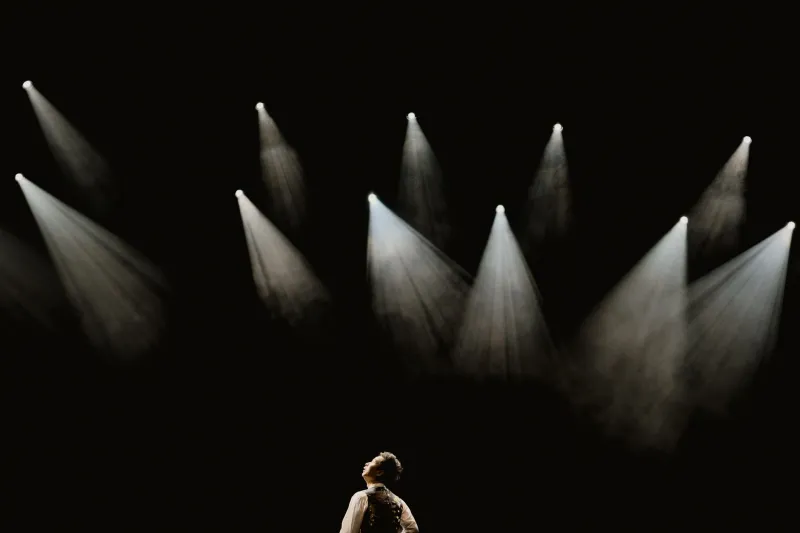
Here's the thing about permission: the version of it that actually changes your career isn't the kind that comes from a casting director or a manager or a standing ovation. It's the kind you give yourself, quietly and without fanfare, in the moments when you choose to stop editing your own light down to a flicker.
You didn't get into this to be invisible. You got into this to be seen. To tell stories that land. To create something that matters to someone.
You were never waiting for the right moment. You were waiting to decide you were worth showing up for.
That decision is yours. It always has been.