Their Timeline Is Not Your Deadline
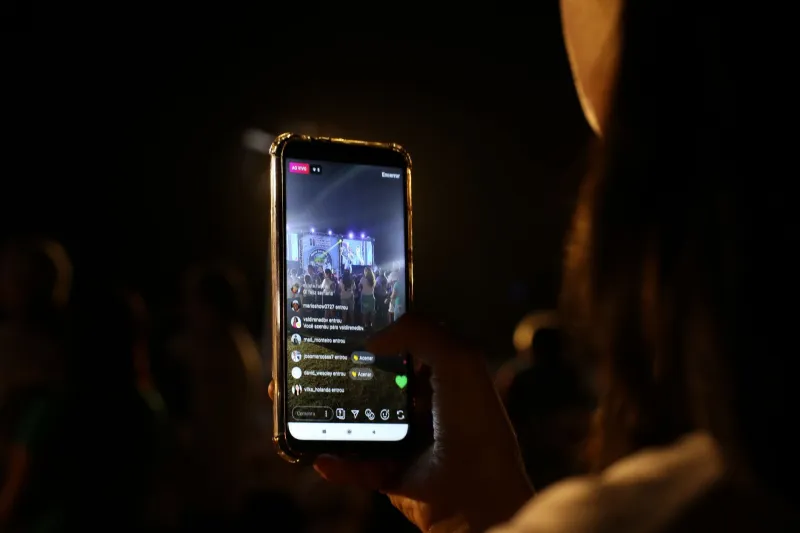
Somewhere between your morning coffee and your third Instagram scroll, it happens. A peer books a national tour. A classmate lands a recurring TV role. Someone you graduated with just signed with a major management company. And suddenly, without meaning to, you're doing math in your head — calculating how old they are, how long they've been at this, and what that means about where you should be by now.
This is the comparison trap. And it is absolutely stealing your future.
The Algorithm Was Not Built for Your Mental Health
Here's something worth sitting with: social media platforms are designed to surface peak moments. The booking announcement. The opening night photo. The milestone. Nobody posts the eighteen months of silence before the callback that changed everything. Nobody documents the part they almost quit over. The architecture of visibility is fundamentally skewed toward success, which means your perception of your peers' careers is almost certainly incomplete.
What you're actually comparing yourself to isn't someone else's journey — it's their curated highlight package. And you're comparing it to the full, unfiltered, behind-the-scenes cut of your own life. That's not a fair fight. It was never going to be.
The psychological toll of this is real and documented. Research on social comparison theory, first developed by Leon Festinger back in the 1950s, tells us that humans instinctively measure themselves against others — particularly those in similar circumstances. Performers are especially vulnerable because the industry is built on visible, public achievement. A booking isn't just a job. It's a data point that gets broadcast. And when you're in a slow season, those broadcasts feel like sirens.
Milestones Are Not Universal
There's a myth baked into performance culture that careers follow a recognizable arc: training, early gigs, breakthrough moment, sustained success. The industry loves this narrative because it's clean and sellable. But the actual careers of working performers — the ones who last — are almost never that linear.
Take a look at the performers you genuinely admire. Not the ones who burned bright at twenty-two and disappeared. The ones who are still here, still creating, still relevant. Chances are their path had detours, pivots, long stretches of what looked like stagnation from the outside. Vera Farmiga didn't become a household name until her late thirties. Lin-Manuel Miranda spent years developing In the Heights before Hamilton made him a cultural phenomenon. These aren't cautionary tales — they're the norm, dressed up as exceptions.
The industry creates false urgency around age and timing, and performers internalize it. But urgency is a tool of control, not a reflection of reality. Your career does not expire.
The Danger of Borrowed Metrics
When you use someone else's timeline as your benchmark, you're essentially adopting their goals as your own. And here's the uncomfortable question: are those actually your goals?
Maybe your peer's dream was always Broadway. Maybe they've been laser-focused on that specific path since childhood, and the linear climb makes sense for the life they've built. But your story is different. Your strengths are different. Your definition of a meaningful career might involve creating original work, building an audience online, doing regional theater in a city you love, or developing a multi-hyphenate career that doesn't have a clean title yet.
None of that is lesser. But it will never look like someone else's trajectory — and it's not supposed to.
Borrowed metrics are dangerous because they make you optimize for the wrong things. You start chasing the booking that looks impressive on paper instead of the opportunity that genuinely moves you forward. You say yes to things that fit the template instead of things that fit you. Over time, this doesn't just slow your career down — it quietly hollows it out.
How to Recalibrate Without Disconnecting
The answer isn't to delete your apps and live off the grid. Community and visibility matter in this industry, and staying connected has real professional value. The goal is to change your relationship with what you're seeing, not to stop seeing it.
A few things that actually help:
Define your own north star metrics. What does progress look like specifically for you? Not bookings in general — your bookings, in the kinds of projects that align with where you're trying to go. Write it down. Revisit it quarterly. When comparison creeps in, you have something concrete to return to.
Audit your feed with intention. Who are you following, and how does it make you feel? There's a difference between accounts that inspire you and accounts that consistently make you feel inadequate. You're allowed to unfollow, mute, or limit your exposure to the latter without guilt.
Celebrate privately first. Before you announce anything, sit with your own wins. Get comfortable feeling good about your progress independent of external validation. This builds a kind of internal anchor that makes comparison less destabilizing.
Talk to people, not feeds. Real conversations with peers — honest ones, where people admit to the hard stretches — are a corrective to the highlight reel problem. Find your people and actually talk to them. You'll quickly realize that almost everyone feels behind sometimes.
Your Story Has Its Own Pace
There's a version of your career that only you can build, and it will take exactly as long as it takes. That's not a consolation prize — it's the actual truth about how creative careers work. The performers who endure aren't the ones who hit the milestones fastest. They're the ones who stayed connected to why they're doing this in the first place, even when the external evidence was thin.
Someone else's success is not evidence of your failure. It's just their story, moving at their speed, toward their destination.
You've got your own story to write. And it's nowhere close to finished.