Second String, First Rate: What Understudies Know That Stars Often Don't

Let's talk about the weird gift nobody wants.
You auditioned hard. You prepared. You showed up fully. And you got the call — but not the call you were hoping for. You're the understudy. The backup. The one who learns every line, every blocking note, every emotional beat of a role you may never actually perform. You sit in rehearsals watching someone else inhabit the part you wanted. You smile through it. You take notes.
And quietly, without anyone making a big deal about it, you become a better performer than you would have been if you'd gotten the lead in the first place.
This isn't a consolation prize argument. This is actually how it works.
The Observation Advantage
When you're the lead, you're in survival mode. You're managing your own performance, your nerves, your cues, your relationship with the audience in real time. There's no bandwidth left to study the architecture of the whole thing from the outside.
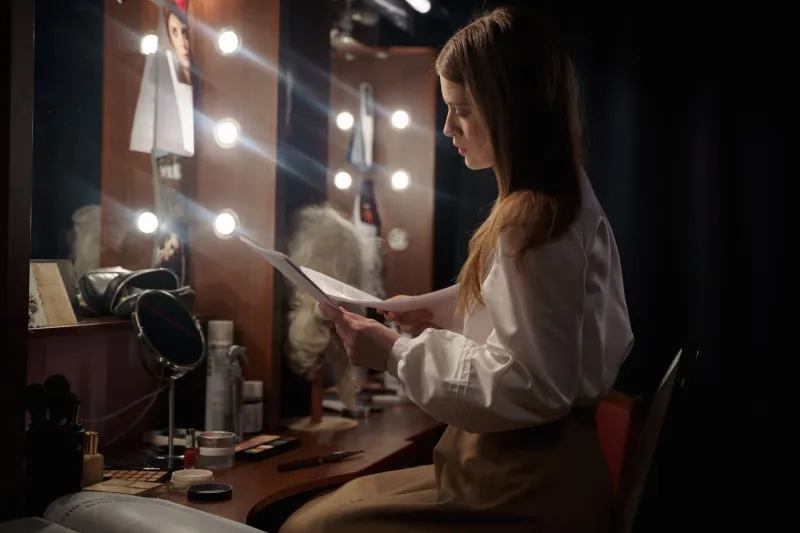
Understudies don't have that problem. They get to watch — really watch — with a level of analytical attention that most performers never develop. You're not just experiencing the show; you're dissecting it. You notice what works in Act Two on a Tuesday versus a Saturday. You clock when the lead makes a choice that lands differently depending on the energy in the room. You figure out what's written into the material versus what's being invented in the moment.
That's not passive observation. That's graduate-level performance study, and you're getting it for free.
Actors who've done serious understudy stints consistently talk about how much it sharpened their instincts — not just for the role they were covering, but for performance in general. You develop a kind of dual consciousness: the ability to be inside a moment while also holding a bird's-eye view of how that moment functions. That skill is genuinely rare, and it doesn't come from being handed the lead.
The Readiness That Can't Be Faked
Here's the understudy's specific pressure: you have to be completely ready at all times, with almost no guarantee that you'll ever actually go on.
That's a strange psychological space to live in. It requires a kind of disciplined, low-ego commitment that is honestly harder than just being the person everyone's counting on every night. The lead has the adrenaline of necessity. The understudy has to manufacture their own urgency, over and over, for a performance that might never happen.
And then — sometimes — it does happen. At the last minute. With no warm-up. In front of a full house who came to see someone else.
If you can handle that, you can handle almost anything the industry throws at you.
The performers who've been through that crucible tend to carry a particular kind of unflappable quality. They've already faced the worst version of high-stakes — underprepared, undersupported, stepping into a role mid-run — and they've done it. That experience recalibrates what feels scary. It builds a floor under your confidence that no amount of headline billing can actually create.
Adaptability as a Career Superpower
The entertainment industry — whether we're talking Broadway, regional theater, TV, film, or live performance of any kind — is fundamentally unpredictable. Leads get sick. Projects get recast. Productions get extended or cut short. The performer who can pivot without completely falling apart is worth their weight in gold to any director, producer, or creative team.
Understudies are trained pivoters. It's literally the job description.
That adaptability doesn't stay siloed in the understudy experience. It becomes part of how you approach every project. You're less precious about your process because you've had to make your process work under every possible condition. You're more collaborative because you've spent time understanding how a production functions as a whole system rather than just your corner of it. You're more resilient in auditions because you've already been told 'not quite' in a very specific, very public way — and you showed up and did the work anyway.
These aren't soft skills. In a business this competitive, they're the difference between a career and a few credits.
What Waiting Actually Teaches You About Wanting
There's something else that happens in the understudy experience that doesn't get talked about enough: you figure out how much you actually want it.
When the path is easy and the role comes quickly, it's hard to know how deep your commitment really runs. But when you're doing the full work for partial recognition — when you're showing up every single night to be ready for a performance that might never be yours — you learn something true about your own hunger.
Some people discover they don't want it as much as they thought. That's genuinely useful information. It redirects energy toward something that actually fits.
But the ones who stay? Who keep showing up, keep staying ready, keep doing the work with full commitment even when nobody's watching? Those are the performers who have something that's almost impossible to teach. They've proven their dedication to themselves. Not to an audience, not to a director — to themselves. And that internal proof of commitment becomes a kind of bedrock that holds everything else up.
The Moment the Wings Become the Stage
Almost every performer who's spent meaningful time in a supporting or understudy position can point to a specific moment when the waiting paid off — not just in the obvious 'I finally got the lead' way, but in something subtler and more lasting.
Maybe it was the audition where they were so relaxed and prepared that the casting director called their agent before they'd even left the building. Maybe it was the callback where they made a bold choice that surprised even themselves, because they'd spent so long watching what bold choices look like from the outside that they'd internalized the architecture of risk. Maybe it was the moment they stepped into a lead role mid-run and realized, with genuine surprise, that they weren't scared — they were ready. They'd been ready for months.
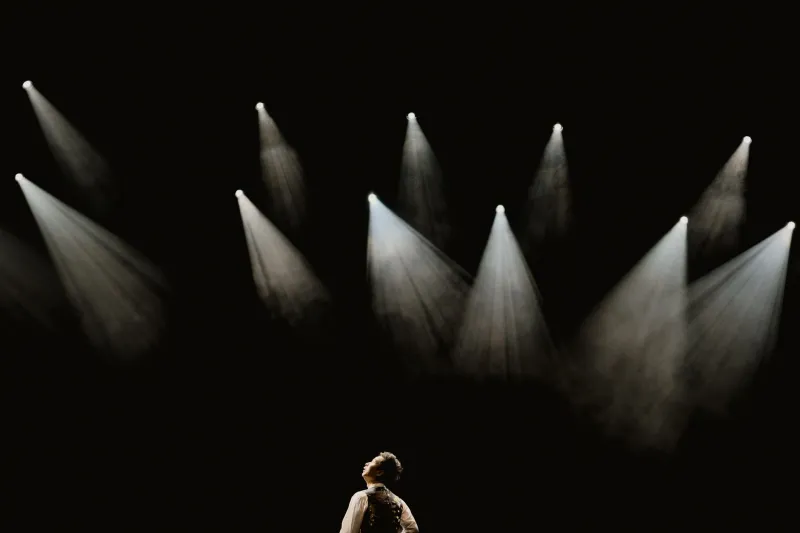
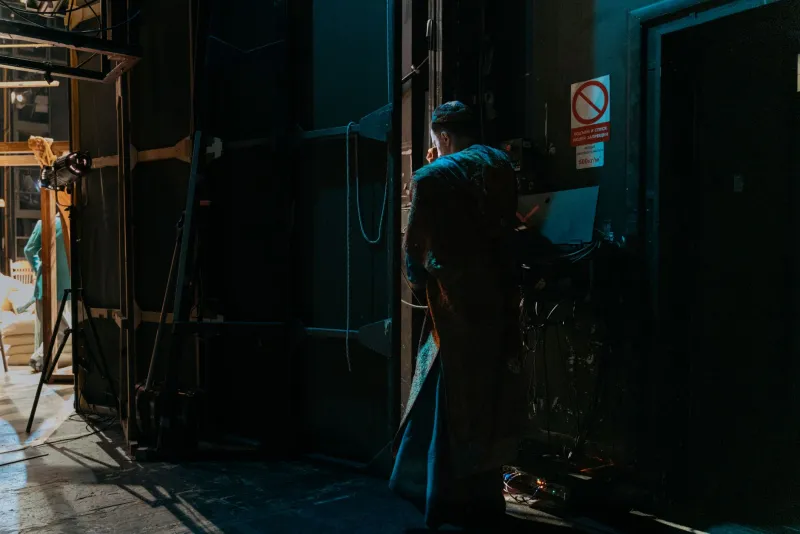
The wings aren't a lesser place. They're a specific kind of training ground. And the performers who use that time well — who treat every understudy rehearsal like a performance, who study the whole show instead of just their parts, who build their readiness quietly and without fanfare — those are the ones who tend to arrive on center stage with something extra.
Not because they were handed it. Because they built it, in the dark, while everyone else was watching someone else.
That's not second choice. That's the long game. And it's one worth playing.