When 'Always Ready' Becomes 'Never First': Breaking Out of the Permanent Backup Role
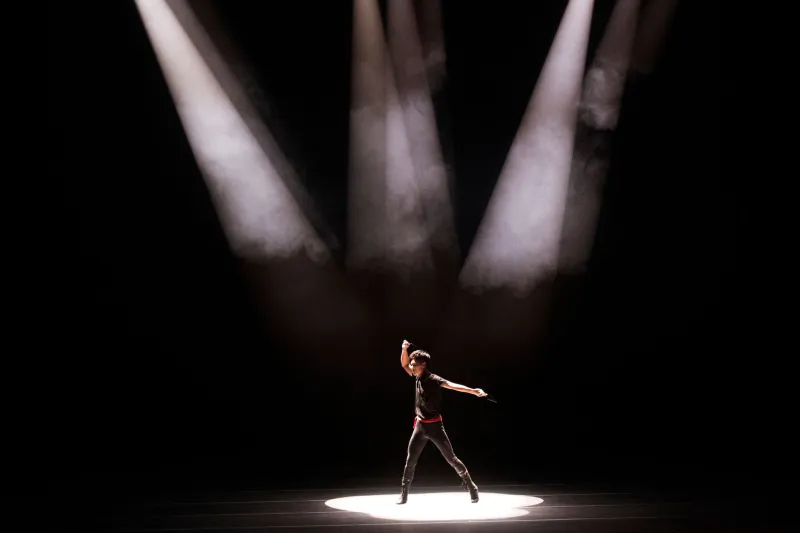
There's a version of understudy thinking that's genuinely brilliant. You stay observant. You learn from the person in front of you. You stay ready without being reckless. That's not smallness — that's craft. That's patience with a purpose.
But there's another version that looks almost identical from the outside, and it's doing real damage to your career. It's the version where 'staying ready' becomes a permanent residence. Where humility quietly curdles into hiding. Where every year that passes, you tell yourself you're still just preparing — and somewhere along the way, you stopped asking: preparing for what, exactly?
If that lands a little close to home, keep reading.
The Story We Tell Ourselves About Readiness
The understudy role carries a specific kind of nobility in the performing arts. You know the material cold. You show up every single night even when your name isn't on the marquee. You don't complain. You don't demand. You wait.
And yes — there is real value in that. The discipline it builds, the intimacy with a role you develop from the wings, the way you learn to read a room without being in it — those are legitimate skills. Some of the sharpest performers I've ever encountered came up through years of understudy work, and it shows in how they hold a stage.
But here's what doesn't get said enough: the understudy mindset was never meant to be a lifestyle.
At some point, the preparation has to be for something. The readiness has to translate into a step forward. And if it doesn't — if you've been 'almost ready' for three years, five years, a decade — then the story you're telling yourself about patience and humility deserves a closer look.
How to Know When You've Crossed the Line
This is where it gets uncomfortable, because the shift from strategic patience to self-protective shrinking is subtle. It doesn't happen all at once. It's a series of small decisions that each feel reasonable in isolation.
You pass on submitting for the lead because you think someone else is more prepared. You volunteer to assist on a project instead of pitching your own. You frame your ambitions in qualifiers — someday, eventually, when the time is right — without ever defining what 'right' actually means.
Ask yourself this: Is your understudy posture a strategy, or is it a shield?
Strategy has a timeline. It has benchmarks. It asks, what am I learning here, and how does it move me toward something specific? Strategy is uncomfortable in a productive way — it's the discomfort of growth.
A shield, on the other hand, is comfortable in a dangerous way. It protects you from rejection by keeping you out of the running. It lets you stay in love with your potential without ever having to test it. And it comes with a built-in excuse: I'm not behind, I'm just still preparing.
If you can't point to a concrete moment when your preparation will be 'done,' that's worth sitting with.
The Identity Trap
One of the sneakier dimensions of this is how deeply the backup role can become part of how you see yourself. After enough time, it's not just a position you hold — it's a lens through which you interpret everything.
You start to read audition rooms as places where you're probably not the first choice. You assume that opportunities that come your way are consolation prizes. You unconsciously position yourself as the supporting character in conversations about your own career.
This isn't a character flaw. It's a learned pattern, and it's shockingly common among performers who are genuinely talented. Sometimes the people most capable of carrying a room are the last ones to believe it — because they've spent so long watching someone else do it.
Recognizing the identity trap doesn't mean swinging to the opposite extreme and performing false confidence. It means doing the slower, harder work of separating what you've been doing from who you are.
Flipping the Script — Practically
So what does it actually look like to shift out of permanent understudy mode? A few things that aren't about motivation speeches or vision boards:
Name the thing you've been circling. The role, the project, the creative direction, the ask you haven't made. Get specific. Vague ambition is easy to postpone. A specific goal has a deadline.
Audit your language. Pay attention to how you talk about your own work, especially in professional settings. Are you consistently downplaying, hedging, or pre-apologizing? Practice stating what you do and what you want without the qualifiers. It feels weird at first. Do it anyway.
Stop waiting for someone to tap you in. In theater, the understudy waits for a call. In your actual career, nobody's going to formally announce that you're ready. You have to decide that. You have to make the move. Waiting for external permission is how years disappear.
Create your own main-stage moments. If the industry isn't handing you the platform yet, build a smaller one and treat it like it matters — because it does. A workshop production, a self-produced short, a showcase you organized yourself. These aren't consolation prizes. They're proof of concept.
Find people who see you as the lead. Your circle shapes your self-perception more than you think. If everyone around you only knows you in a supporting capacity, you need to expand who's in the room.
The Respect You're Not Giving Yourself
Here's the thing about performers who stay in understudy mode indefinitely: they often have a ton of respect for everyone else's readiness and very little for their own. They'll champion another performer's talent all day long, but when it comes to their own, there's always a caveat. Always a 'but.'
That's not humility. Humility acknowledges your limitations while still owning your strengths. What you're describing — if it's familiar — is closer to self-erasure dressed up in professional language.
You did the work. You learned the material. You showed up night after night when your name wasn't on the call sheet. That counts. That matters. And at some point, the most honest thing you can do — for yourself and for the people who've been watching you grow — is to step forward and let it show.
The main stage isn't just for people who were never afraid. It's for people who were afraid and stepped out anyway.
You've been ready longer than you think.