Scrolling Through Someone Else's Success Is Slowly Killing Your Creativity

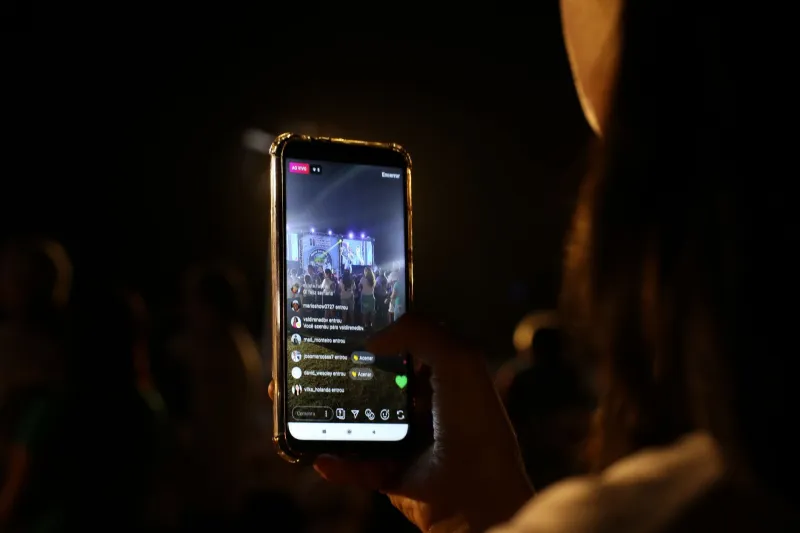
Let me paint you a picture. It's a Tuesday afternoon. You're between auditions, maybe doing some vocal warm-ups or running lines. You pick up your phone for what you tell yourself will be thirty seconds, and then — there it is. Someone you graduated with just announced they booked a series regular. Someone from your old improv troupe just signed with a major agency. Someone who was in the same workshop as you six months ago is now on a billboard in Times Square.
And suddenly, your warm-ups feel pointless. Your lines feel hollow. The project you were actually excited about five minutes ago now feels like a participation trophy.
This is the comparison trap. And it is actively poisoning your creativity.
Why Your Brain Is Wired for This (And Why That's a Problem)
Here's the thing — comparison isn't a character flaw. It's evolutionary wiring. Human beings have always measured themselves against the people around them as a way of understanding where they stand in a social group. For most of human history, your social group was maybe a hundred people in a village. You knew everyone's whole story. Context existed.
Now your social group is effectively infinite, and everyone's story has been curated into a highlight reel.
Psychologists call this social comparison theory, and research consistently shows that upward social comparison — measuring yourself against people you perceive as doing better — tanks motivation and self-efficacy when you're already in a vulnerable state. For performers, who live in a near-constant state of audition vulnerability, that's basically always.
What makes it worse is that platforms like Instagram and TikTok are specifically designed to surface success content. Announcements. Bookings. Callbacks. Milestones. Nobody posts about the forty-seven auditions that went nowhere. Nobody goes live to talk about the six-month dry spell. The algorithm rewards celebration, so that's all you see — which means you're not comparing yourself to reality. You're comparing yourself to the very best moments of other people's lives, presented as if that's just their Tuesday.
The Specific Way Comparison Hijacks Your Creative Decision-Making
This is where it gets really sneaky. The damage comparison does isn't just emotional. It actively distorts the choices you make about your work.
When you're deep in a comparison loop, you stop asking What is authentic to me? and start asking What is working for them? You start chasing aesthetics that don't belong to you. You audition for projects that don't excite you because they seem like the kind of projects that get people noticed. You abandon the weird, specific, deeply personal creative ideas — the ones that are actually your best material — because they don't look like what's getting rewarded in your feed.
You become a cover band of someone else's career.
And here's the brutal irony: the things that make other performers magnetic are almost always the things that are most specific to them. Their particular brand of weirdness. Their lived experience. Their specific combination of skills and references and obsessions. You can't replicate that. Trying to will only produce a diluted version of something that already exists, which is the least interesting thing you could possibly offer.
Recognizing the Wrong Metrics
One of the most useful exercises I've ever done is asking myself: Am I measuring myself against something I actually want, or against something that just looks like success from the outside?
Series regular on a network show? Sounds incredible. But do you actually want to live in one city for five to seven years shooting the same character? Do you want that particular pressure and that particular schedule?
Major agency signing? Amazing. But does that person's career path align with the kind of work you want to be doing, or are you just responding to the prestige signal?
When you dig into it, a lot of what we envy isn't actually what we want. We're responding to the social signal — the visible marker of having made it — not to the actual substance of the career. That's worth knowing, because chasing a signal instead of a genuine goal is a reliable way to end up somewhere that doesn't fit you.
Practical Ways to Protect Your Artistic Identity
So what do you actually do about this?
Audit your feed ruthlessly. If someone's content consistently makes you feel like your work is less-than, you don't have to hate them — you can just mute them. This is not pettiness. It's creative hygiene.
Create before you consume. Make it a rule that you do at least one creative act — writing, practicing, generating — before you open social media in the morning. What you make first thing sets the tone for how you think about your work all day.
Build a comparison-free zone. Identify one project, one practice, one creative space that is just yours. You don't talk about it on social media. You don't measure it against anyone else's output. It exists purely for the development of your own voice.
Get honest about your actual goals. Write them down. Not the goals that sound impressive — the goals that actually light you up. When you know clearly what you're building, someone else's milestone stops being a threat and starts being just... their thing.
Celebrate specificity. Every time you notice something about your creative instincts that is genuinely specific to you — a weird reference point, an unusual skill combination, a perspective nobody else has — write it down. Build a running list of what makes you you. That list is your competitive advantage. Guard it.
The Real Work
The performers who build careers that last aren't the ones who were best at tracking what everyone else was doing. They're the ones who got so absorbed in developing their own thing that they eventually stopped looking sideways.
That's not arrogance. It's focus. And in an industry that profits from keeping you distracted by everyone else's trajectory, focus is genuinely radical.
Your creativity doesn't need more inspiration from other people's wins. It needs more time, more protection, and more trust from you.
Close the app. Get back to work. The thing you were building before you picked up your phone? That's still the most important thing in the room.